Strawberry plants by mail: June-bearing or day-neutral, bare-root crowns or plugs, and when each should arrive
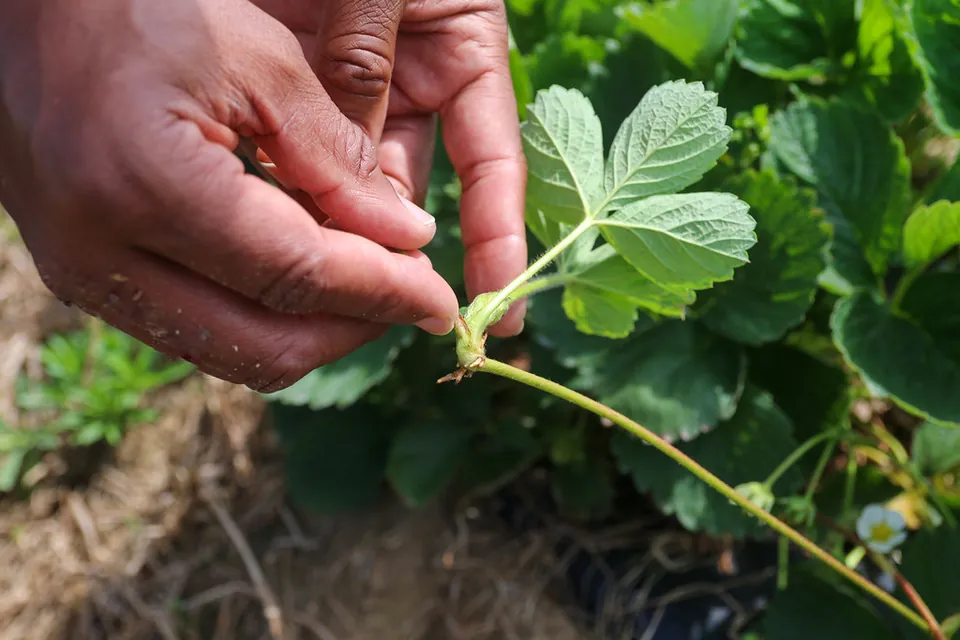
Strawberries are one of the most rewarding things to order by mail, and one of the most alarming to unpack. A whole bundle of plants fits in a small box: brown crowns, a tuft of dry roots, maybe a shriveled leaf or two. They look dead. They are not. Dormant strawberry plants wake up fast once they are in the ground, and catalogs offer far more varieties than any garden center. The trick is choosing the right type for your region and having the bed ready the day the parcel lands.
Three types, three harvest patterns
Every strawberry listing names a type, and it matters more than the variety name. University of Minnesota Extension describes three:
- June-bearing: one large, concentrated crop in early summer. Of the three, June-bearers normally give the largest yield per season, but over a short window. They also make the most runners.
- Everbearing: two crops, one in early summer and a second in early fall.
- Day-neutral: flowers and fruit through most of the growing season, in smaller pickings. They send out fewer runners, which makes them tidy enough for the front of a border or a container.
If you want jam, pick June-bearers: you get the berries all at once. If you want a handful for breakfast from June to frost, pick day-neutral. Minnesota notes one catch for cold gardens: most day-neutral varieties are not hardy enough to overwinter there reliably, so northern growers may treat them as short-lived plants.
A fourth option sits apart. The woodland or alpine strawberry, Fragaria vesca, is a separate species with small, sweet fruit. It tolerates part shade, and because many alpine plants are raised from seed, some forms make runners and some do not. It is often sold as seed rather than as plants, which puts it on the seed side of the catalog. Our guide to reading a seed catalog explains the terms you will find there.
North or South: two ways of growing them
Where you live decides not only the variety but the whole system, and with it the month your plants should arrive.
Matted rows, planted in spring
Across most of the North and in cooler upland areas, strawberries are grown as perennials in matted rows. You set dormant plants in spring, let runners fill in the row over the summer, and pick the first real crop the following year. Minnesota recommends plants 18 to 24 inches apart, in rows 3 to 4 feet apart; the runners do the rest. The same source gives a sense of how fast that happens: a single June-bearing plant can produce up to 120 daughter plants in one season. In South Carolina, Clemson Extension says this system works best in the Upstate, where plants can keep fruiting for several years.
Annual hills, planted in fall
In warm, humid areas, matted rows often fail. Clemson explains that in the Sandhills and Coastal Plain of South Carolina, anthracnose usually destroys matted-row plantings before they fruit, so gardeners copy commercial growers: plants go into raised beds in fall, fruit the next spring, and are discarded after harvest. Clemson's window is September 15 to November 15, with October usually best in the Coastal Plain and September preferred in the Upstate. Its recommended varieties for this system are 'Chandler' and 'Camarosa'. If you do try matted rows in those areas, Clemson advises anthracnose-resistant varieties only, noting that 'Sweet Charlie' is resistant while 'Chandler' is susceptible.
In mid-November, then, a southern gardener is at the very end of the planting season, while a northern gardener is choosing varieties for spring. Most nurseries schedule shipping by region; our guide to hardiness zones and shipping seasons explains how they decide when your order goes out.
Bare-root crowns or plugs?
Catalogs sell strawberries in two forms.
- Bare-root dormant plants are dug from nursery fields, trimmed and shipped without soil, usually tied in bundles. They are the cheapest way to plant a bed and the standard choice for spring matted rows. Minnesota points out that many of the varieties it recommends for northern gardens are commonly available only from mail-order sources.
- Plugs are rooted runner tips grown in small cells of potting mix. They cost more per plant but establish quickly, which is why they suit fall planting in the South. Clemson notes that potted plants need less watering to establish than freshly dug ones.
The general advice on dormant stock in our article on bare-root plants by mail applies here too, with one difference: strawberry crowns are small, so they dry out faster than a fruit tree's roots.
When the parcel arrives
Minnesota describes dormant plants exactly as they look: small and brown, not yet growing. Open the package right away and check that the roots are cool and slightly damp, not slimy and not bone dry.
- Plant as soon as you can. Keep the plants moist and cool until then.
- If the ground is not ready, Clemson's advice is simple: store the plants in a refrigerator until planting. Keep them in their bag so they do not dry out.
- Do not wait for leaves. Minnesota says fresh green growth usually appears within a week or so after planting, not before.
Our checklist for when your plants arrive covers what to photograph and report if a shipment comes in damaged.
Planting depth: the one thing to get right
Strawberries are unusually sensitive to depth. Minnesota puts it plainly: crowns planted too shallow lose water and can die; crowns planted too deep may not be able to push their leaves out of the soil. The target is the middle of the crown at the soil line, with all the roots buried.
For bare-root plants, spread the roots in a hole or trench deep enough to take them without folding. Clemson warns against bending the roots into a "J", and for fall plants in raised beds it suggests setting the crown slightly above the soil line, with the roots a quarter inch below the surface. Firm the soil and water thoroughly.
A few site rules come from both extension services:
- Sun: at least six hours of direct sun a day; Minnesota calls ten or more ideal.
- Drainage: well-drained soil that does not hold standing water after heavy rain. Clemson favors sandy loam at pH 6.0 to 6.5 and recommends a soil test beforehand.
- Water: about an inch a week according to Minnesota, and 1 to 1½ inches a week at key stages according to Clemson, ideally early in the day so the leaves dry before night.
The first year
The hardest instruction in any strawberry guide is to pick off the first flowers. Minnesota advises pinching flower buds for the first few weeks after planting, so the plant builds roots and leaves before it carries fruit; you can still pick berries later that summer. Clemson goes further for spring-planted matted rows, removing the flowers so the plants put their energy into vigorous runners.
Through the summer, guide the runners where you want new plants and cut off the rest. In cold regions, winter protection is not optional: Minnesota notes that the crown can be killed at 15°F, and advises covering the bed with 4 to 6 inches of weed-free straw after two or three frosts have hardened the plants off. Rake it aside in spring, and leave some between the plants as a summer mulch that keeps the berries clean.
Choosing from the catalog
Minnesota's list of varieties for northern gardens, chosen mainly for flavor and hardiness, includes June-bearers such as 'Honeoye', 'Jewel' and 'Earliglow', the everbearer 'Ogallala', and the day-neutrals 'Seascape' and 'Albion'. Southern lists look entirely different. That is the real lesson: the best strawberry is a regional choice, and your state extension service's variety list is the best filter to apply before you open a catalog. Strawberries also appear in our broader guide to fruit trees and berries by mail, alongside raspberries, blueberries and grapes.
A dry brown crown, set at exactly the right depth, can fill a row with daughter plants by the end of its first summer: with strawberries, the planting hour matters more than the parcel's looks.
Sources
- University of Minnesota Extension, Growing strawberries in the home garden (types, alpine strawberry, mail-order varieties, dormant plants on arrival, spacing, planting depth, sun and water, pinching flowers, runners, winter protection).
- Clemson Cooperative Extension, Home & Garden Information Center, Growing strawberries in South Carolina, HGIC 1405, updated October 2025 (matted row and annual hill systems, planting dates, varieties and anthracnose, storing early plants, crown depth, soil and water).
 Growing what arrives
Fruit trees and berries by mail
Rootstocks, pollinizers and chill hours: ordering fruit that suits your garden.
 Ordering & arrival
Bare-root plants by mail
Dormant roots, no soil: timing, soaking, heeling in and planting right.
 Ordering & arrival
When your plants arrive
Unpack the same day, check, photograph, water, shade, then plant or pot up.