Fruit trees and berries by mail: rootstocks, pollination, chill hours and planting
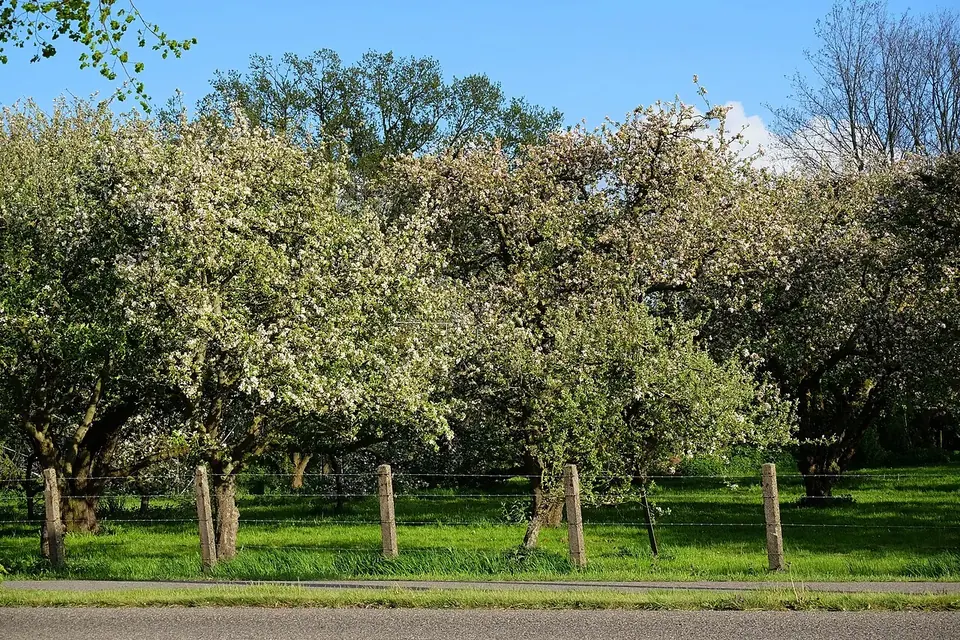
Fruit trees are one of the best reasons to buy by mail: specialist nurseries offer hundreds of apple, pear, plum and cherry varieties on rootstocks chosen for different garden sizes, along with berries and grapes rarely found locally. They are also long-term decisions. A few choices made at order time decide how big the tree will grow, whether it will fruit, and how much spraying it will need.
Rootstock: the hidden half of the tree
Most fruit trees are grafted: the variety you choose (the scion) is joined to the roots of another plant (the rootstock). University of Minnesota Extension explains that an apple tree's final height, width and time to first fruit depend primarily on its rootstock. As a rough guide for apples, it says trees on standard seedling rootstock grow to 20 feet or more, while dwarfing rootstocks give trees of about 8, 12 or 15 feet, 40 to 80% shorter, which can start bearing within a few years. The rootstock does not change the size or quality of the fruit itself.
| Tree size | Good for | Consider |
|---|---|---|
| Dwarf | Small gardens, containers, easy picking and spraying | Often needs permanent staking or support; shallower roots |
| Semi-dwarf | Most home gardens | Needs more space; usually free-standing |
| Standard | Large properties, long-lived trees | Slow to bear; hard to pick and prune at height |
A good catalog names the rootstock, not just "dwarf". If it does not, ask: the name tells you the tree's size, vigour, hardiness and soil preferences. Dwarf trees in large tubs also suit tenants, since they can move with you; our guide to renting a house with a garden covers what to agree with a landlord before planting in the ground.
Pollination
Many fruit trees need pollen from a different, compatible variety that flowers at the same time.
- Apples: University of Minnesota Extension says two varieties are required for successful pollination, and one can be a crabapple; crabapples in the neighbourhood may already provide the pollen a single tree needs.
- Pears, sweet cherries and many plums: often need a partner; some self-fertile varieties exist.
- Peaches, nectarines, sour cherries and most apricots: usually self-fertile.
Catalogs list pollination groups or partners. If your neighbours grow compatible trees within range, you may already have a pollinizer; otherwise order two varieties together.
Chill hours
Most temperate fruit trees need a certain amount of winter cold to break dormancy and flower properly. University of Arizona Cooperative Extension describes this chilling requirement as the accumulation of hours below 45°F and above 32°F, with each variety having its own requirement. In warm-winter regions, low-chill varieties are essential; a high-chill apple may leaf out poorly and flower little. In cold regions, chill is rarely a problem, but hardiness and late frosts are. Your extension office can tell you your area's typical chill hours.
Disease resistance and regional fit
- Choose varieties resistant to the diseases common in your area, such as apple scab, fire blight or cedar-apple rust for apples.
- Check hardiness zone and, in the South, heat tolerance.
- Consider bloom time: late-blooming varieties avoid spring frosts in frost-prone sites.
- Ask your extension service for recommended variety lists for your state; many publish them.
Berries and grapes
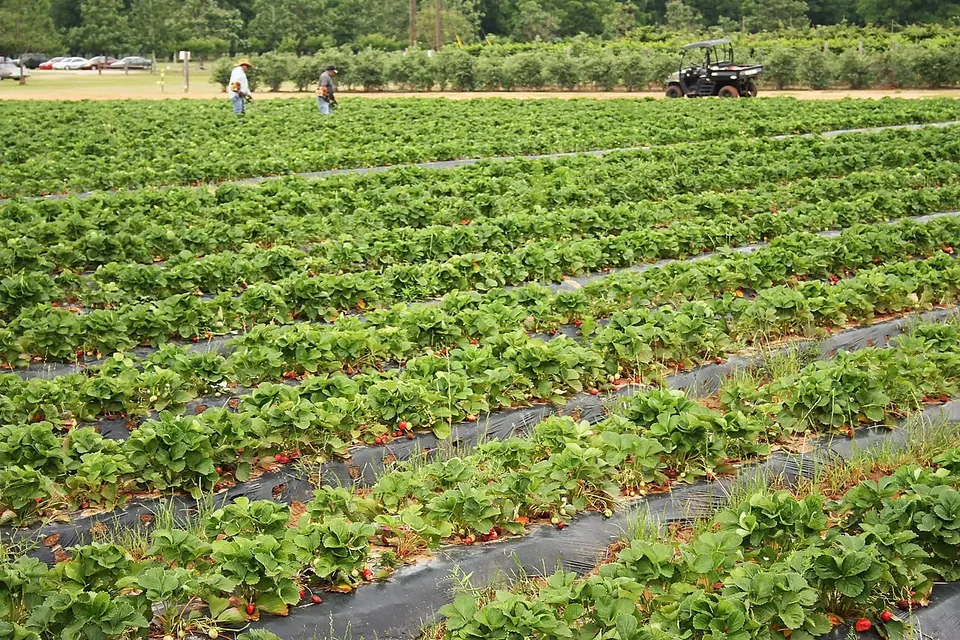
- Strawberries come as June-bearing (one main crop), everbearing or day-neutral (lighter crops over a longer season). They usually ship as bare-root crowns in bundles: plant with the crown at soil level.
- Raspberries and blackberries ship as dormant canes or potted plants. Summer-bearing and fall-bearing types are pruned differently; note which you buy.
- Blueberries need acidic soil; test your soil before ordering, and plant at least two varieties for better crops.
- Grapes vary widely in hardiness and disease resistance; choose varieties bred for your region.
Bare-root or potted?
Most mail-order fruit trees ship bare-root in late winter or early spring, while dormant. They are lighter, cheaper and often establish quickly if planted promptly; follow our bare-root guide. Potted trees can be shipped over a longer season but cost more to send. Either way, plant at the depth the nursery recommends, with the graft union above the soil line.
Rules on shipping fruit plants
Some fruit plants are regulated. Citrus is the main example: to slow the spread of citrus greening, USDA restricts moving citrus plants out of quarantined areas, and some states restrict incoming citrus and other fruit plants. Reputable nurseries know which plants they can ship to you. See plants across borders and state lines.
Planting and the first year
- Choose a sunny, well-drained site with good air circulation.
- Prepare the hole wide rather than deep, and backfill with the native soil.
- Keep the graft union above soil level.
- Water thoroughly and mulch, keeping mulch away from the trunk.
- Prune at planting as the nursery recommends, to balance roots and top.
- Protect young trunks from rodents and deer where needed.
- Remove most fruit in the first year or two so the tree puts energy into roots and branches.
Ordering checklist
- Variety name and rootstock name, with expected mature height.
- Hardiness zone range and, for warm regions, chill hours.
- Pollination partner, if needed, ordered at the same time.
- Disease resistance for the problems common where you live.
- Size and age of the tree: one-year whips are cheaper and easy to shape; two-year branched trees may fruit sooner.
- Ship window for your zone, and the nursery's guarantee on dormant trees.
Choose the rootstock for your space, the variety for your climate, and a partner for pollen.
Sources
- University of Minnesota Extension, Growing apples in the home garden, and Choosing apple rootstocks and ordering bare root apple trees.
- University of Arizona Cooperative Extension, Home orchard care.
- Washington State University Extension, Home orchards (Pacific Northwest gardener's handbook).
- USDA APHIS, Citrus greening quarantine updates.
 Ordering & arrival
Bare-root plants by mail
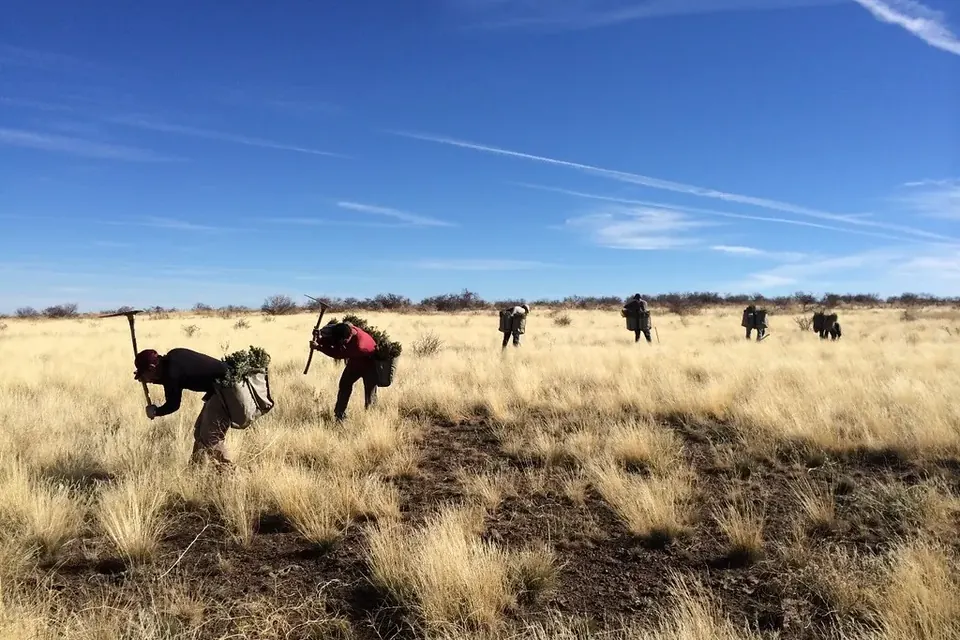
Dormant roots, no soil: timing, soaking, heeling in and planting right.
 Ordering & arrival
Hardiness zones and shipping seasons
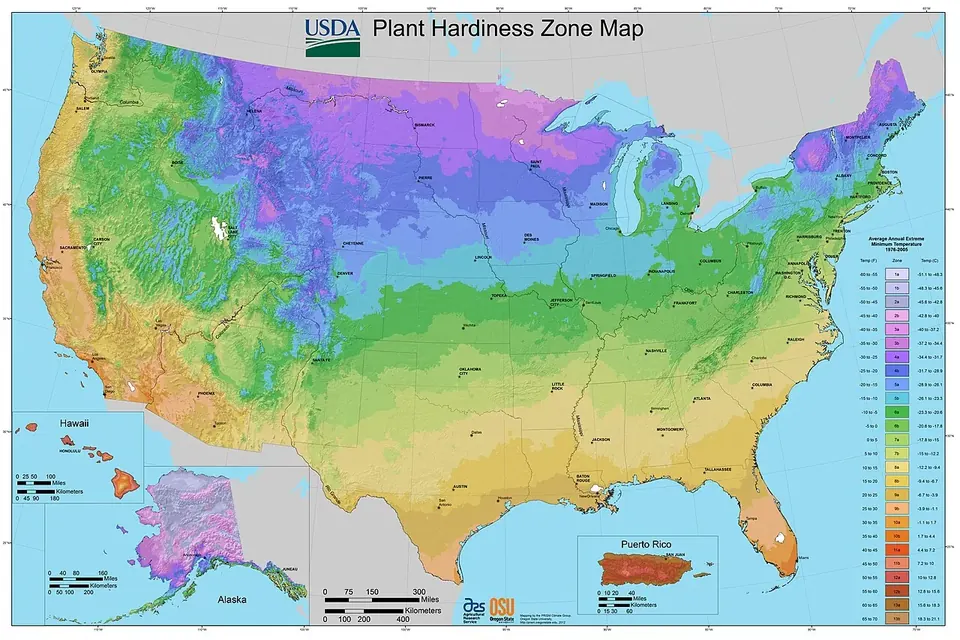
The 2023 USDA zone map, frost dates and heat: choosing the right ship date.
 Growing what arrives
Small-space gardening by mail
Compact varieties, container sizes, watering and vertical growing for small spaces.