Hardiness zones and shipping seasons: when mail-order plants should arrive
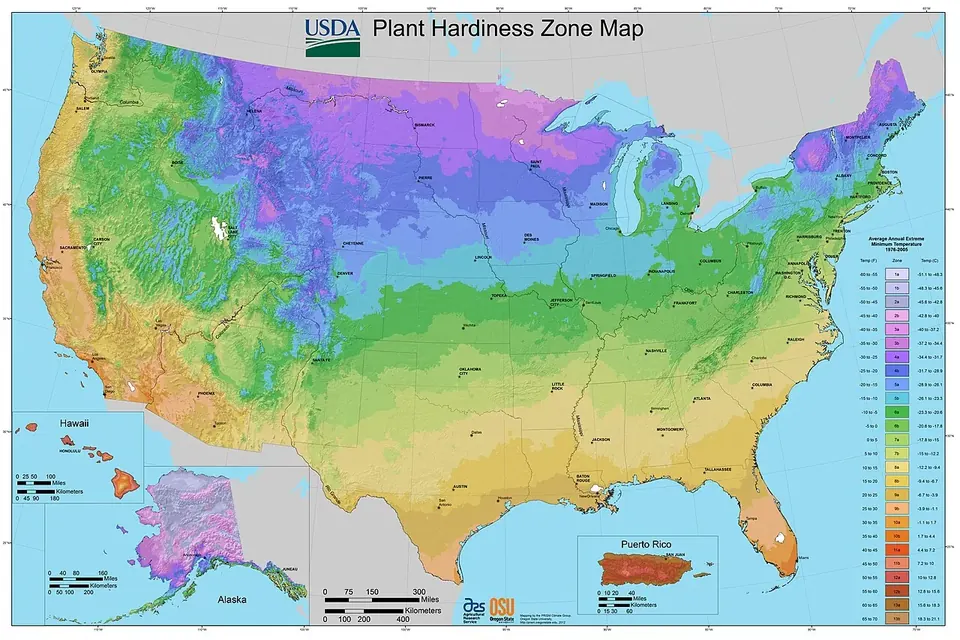
Every mail-order nursery asks for your zip code, and for good reason: the right plant shipped at the wrong time can fail as surely as the wrong plant. Hardiness zones tell you what is likely to survive your winters; frost dates and local weather tell you when it can safely go in the ground. Together, they decide your ship dates.
The USDA Plant Hardiness Zone Map
The USDA Plant Hardiness Zone Map is the standard reference for American gardeners and nurseries. It divides the country by the average annual extreme minimum winter temperature: the coldest temperature of the year, averaged over thirty years. Each zone spans 10°F, split into two 5°F half zones labelled "a" and "b".
The current edition was released by USDA's Agricultural Research Service, with Oregon State University's PRISM Climate Group, in November 2023. It replaced the 2012 map and is based on 1991–2020 data from more than 13,000 weather stations. University extension services explaining the update report that about half of the country shifted into the next warmer half zone, while the rest stayed in the same half zone, and that two new zones, 12 and 13, appear only in Hawaii and Puerto Rico. USDA has cautioned that the changes are not necessarily a reflection of climate change, since the coldest night of the year varies a great deal from one year to the next, and the new map also draws on many more weather stations and a more recent thirty-year period.
You can look up your zone by zip code on the official map website. If your zone changed in 2023, plants rated for your old zone are not suddenly unsuitable; the map describes averages, not a guarantee.
What the zone does not tell you
- Summer heat. A plant hardy in zone 7 may still struggle in a hot, humid zone 7 summer. The American Horticultural Society's Plant Heat Zone Map, published in 1997, divides the country into 12 zones by the average number of days a year above 86°F, a threshold at which many plants start to suffer heat stress.
- Snow cover, wind and drying winter sun, all of which change how cold a plant actually gets.
- Soil drainage. Many plants that are hardy in cold dry soil die in cold wet soil.
- Microclimates. Cities hold heat; hollows collect cold air; walls and slopes shelter. Your garden may behave half a zone warmer or colder than the map.
- Timing of frosts. A late spring frost after plants have leafed out can do more damage than a cold mid-winter night.
Frost dates
For timing, the two most useful numbers are your average last spring frost and first fall frost. Your state's extension service publishes them; local gardeners often know when it is really safe. Seed packets and nursery planting guides count backward or forward from these dates.
Why nurseries ship by zone
Most mail-order nurseries ship to colder zones later in spring and to warmer zones earlier, so that plants arrive close to planting time. Remember that the FTC's 30-day shipping rule for mail orders does not apply to seeds and growing plants, so it is normal for a nursery to take your order in January and ship in April or May. The supplier's shipping calendar is what matters.
| What you are buying | Ideal arrival | Tips |
|---|---|---|
| Bare-root trees, roses, berries | While still dormant, when soil can be worked | Earlier in warm zones; avoid frozen or waterlogged ground |
| Potted perennials and shrubs | After hard frosts, in spring or early fall | Fall planting suits many perennials and shrubs in mild regions |
| Tender plants and vegetable seedlings | After your last frost date, when nights are warm | Delay rather than gamble on a cold snap |
| Spring-flowering bulbs | Fall, when soil has cooled | Order in summer; see our bulb guide |
| Summer bulbs and tubers | Spring, after frost risk | Dahlias, gladiolus and similar are frost-tender |
| Seed | Any time; store cool and dry | Order early for limited varieties |
Choosing your ship date
- Look up your zone and frost dates.
- Read the nursery's shipping calendar for your zone, and whether you can choose a date.
- Pick a week when you will be home and able to plant within a few days of delivery.
- Avoid deliveries just before weekends and holidays, when boxes can sit in depots.
- Watch the forecast and ask the nursery to delay if a hard freeze or heat wave is coming. Many will hold shipments during extreme weather.
Shipping and weather
Live plants are vulnerable in transit to freezing in winter and overheating in summer. Reputable nurseries pause shipments in extreme weather, choose faster services for distant zones, and pack with insulation or cold packs when needed. If a box arrives very hot or frozen, photograph it and contact the supplier at once, then follow our arrival routine.
Pushing your zone
Many gardeners like to try plants rated half a zone or a zone warmer than theirs. It can work in sheltered spots, with good drainage, winter mulch and luck. Mail order is a good way to experiment, but treat these plants as trials: plant them where you can protect them, and do not expect a guarantee to cover a plant sold outside its listed zone range.
The zone tells you what will survive. The frost dates tell you when.
Sources
- USDA Agricultural Research Service, USDA Plant Hardiness Zone Map (2023 edition).
- University of New Hampshire Extension (December 2023), New 2023 USDA hardiness zones explained.
- University of Minnesota Extension (November 2023), New plant hardiness zone map from USDA.
- Iowa State University Extension, Heat zone map (AHS Plant Heat Zone Map).
- Federal Trade Commission, Business guide to the Mail, Internet, or Telephone Order Merchandise Rule.
 Ordering & arrival
Bare-root plants by mail
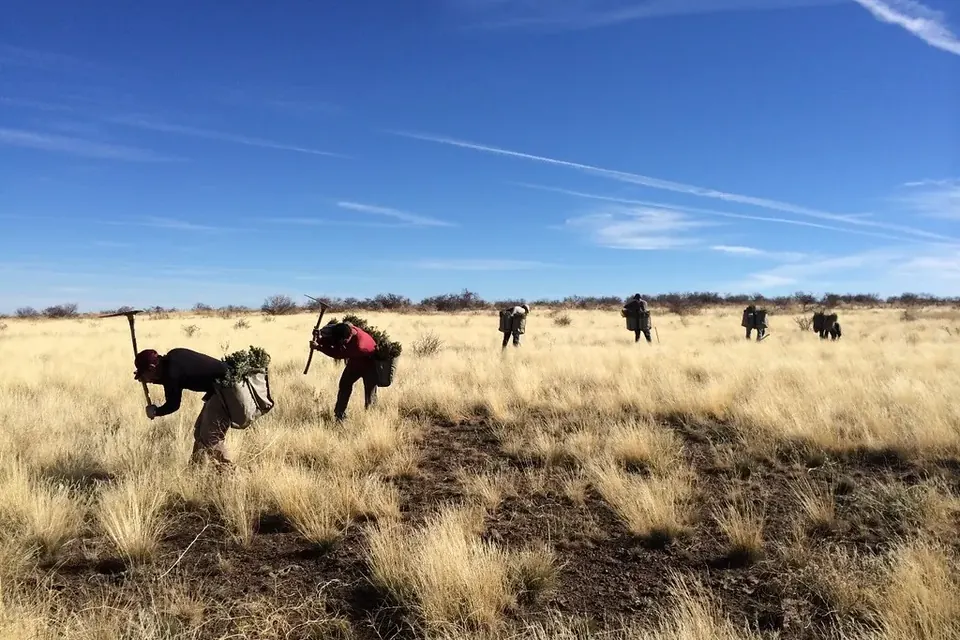
Dormant roots, no soil: timing, soaking, heeling in and planting right.
 Ordering & arrival
Ordering bulbs by mail
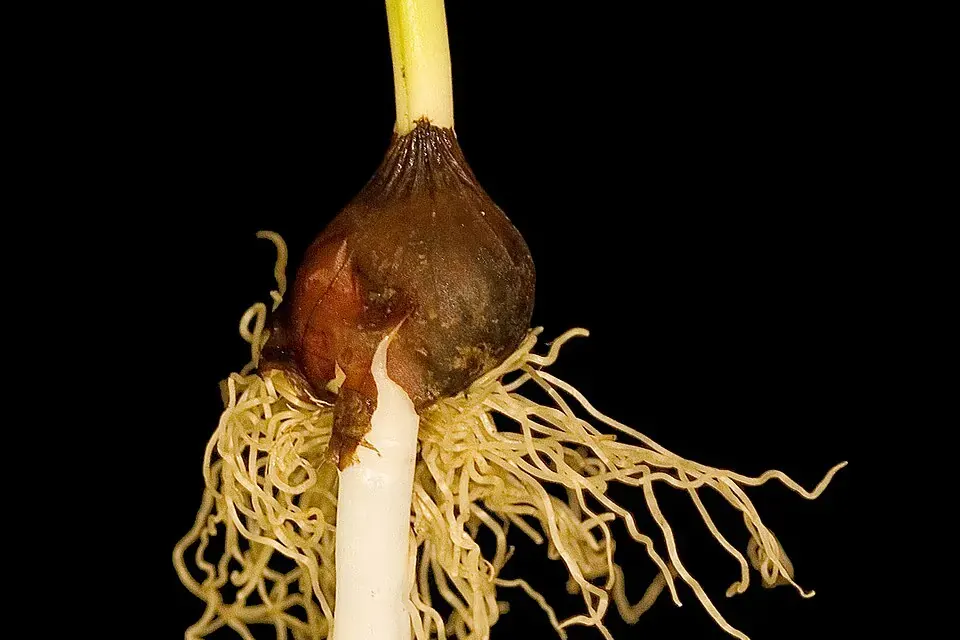
Fall and spring bulbs, sizes, storage, chilling in warm zones, and planting depth.
 Growing what arrives
Fruit trees and berries by mail
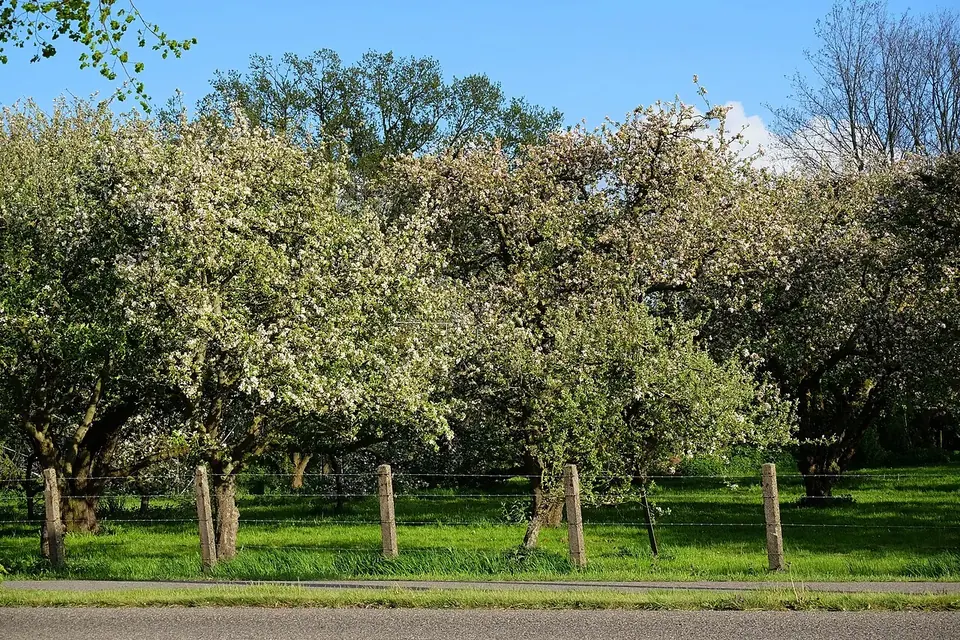
Rootstocks, pollinizers and chill hours: ordering fruit that suits your garden.