Sweet potato slips by mail: choosing varieties, reviving the parcel and planting into warm soil
Of everything a vegetable catalog ships, sweet potatoes make the worst first impression. The box holds a bundle of leafy stems, often with no roots at all, sometimes limp from the journey. That is normal. Sweet potatoes are grown from these cuttings, called slips, and they root so readily that a tired bundle planted at the right time usually turns into a sprawling bed of vines. Ordering well is mostly about timing: the plants hate cold soil, and the box should arrive when your ground is ready for them, not before.
What a slip is, and why it ships bare
A slip is a sprout pulled from a sweet potato root bedded the season before. Clemson University's Home & Garden Information Center describes them simply as sprouts from the previous season's roots. Growers bed roots in warm sand or soil, let them send up shoots, then pull or cut those shoots once they are several inches long. University of Maryland Extension notes that slips have no roots when pulled, which is why they must be kept watered until planted.
This is unlike the seed potatoes sold for ordinary potatoes, which are tubers cut and planted directly. Sweet potatoes belong to a different plant family, and you plant the young shoot, not the root. It also explains the price: you are paying for a nursery bed's worth of work, not for a seed packet.
Why buy slips instead of sprouting your own
You can sprout a sweet potato from the kitchen on a windowsill, and Clemson gives the jar-and-toothpick method. Two things make bought slips worth considering. First, Clemson points out that grocery-store roots are often treated to stop them sprouting, so they may sit in the jar for weeks doing nothing. Second, a supermarket root tells you nothing about the variety, and variety matters a lot in a short season.
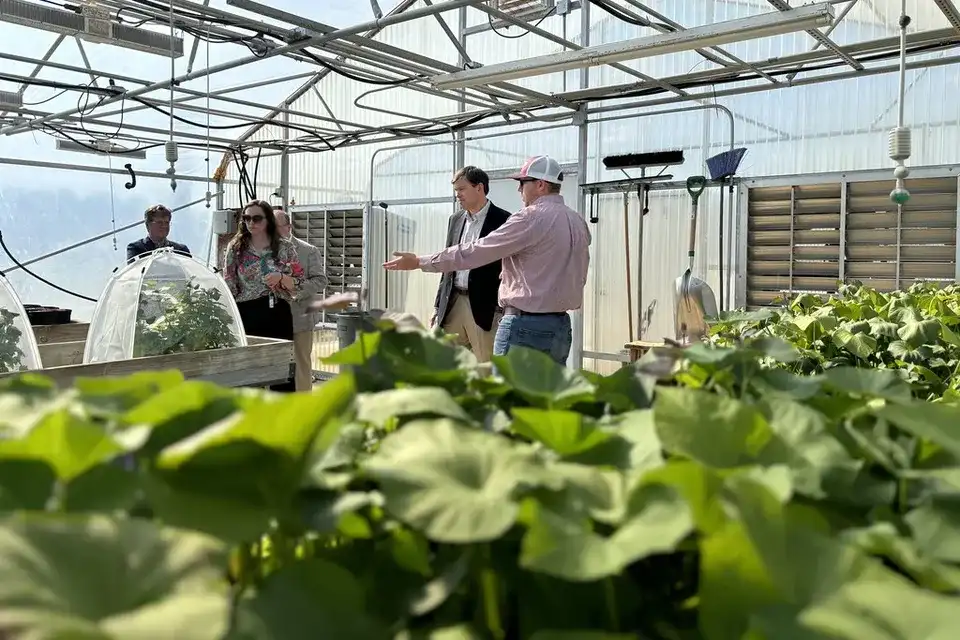
There is also plant health. Sweet potatoes are propagated vegetatively, so any virus in the mother root travels into every slip it produces. That is the reason for clean-plant programs like the one in Mississippi pictured above, which keep tested stock in greenhouses and supply it to the growers who produce commercial slips. When a catalog says its slips come from certified or virus-tested stock, that is what it means. Clemson's one specific warning is easy to check yourself: do not plant transplants with black rot spots on the lower stems.
Choosing a variety
The two numbers to read in a listing are days to maturity and pest resistance. Days are counted from planting the slip to digging the roots, so in a northern garden a shorter variety can be the difference between a harvest and a row of pencil-thin roots. Clemson's list gives these figures for some widely sold kinds:
| Variety | Days to maturity | Notes from Clemson |
|---|---|---|
| Beauregard | 90–100 | Quickest to harvest, consistent shape, stores well; not resistant to root-knot nematodes |
| Covington | 95–110 | Uniform shape, good storage; resistant to southern root-knot nematode and Fusarium wilt |
| Centennial | 100–110 | Resistant to root-knot nematodes and wireworms |
| Vardaman | 100 | Bush-type habit for smaller gardens; susceptible to soil insects and nematodes |
| Murasaki | 100–120 | Purple skin, highly resistant to southern root-knot nematode, vigorous vines |
| Jewel | 120–135 | High yielding and stores well, but needs a long season |
Maryland Extension adds that the moist, orange-fleshed types most Americans know are only one group: drier Japanese and Korean types store better and are gaining popularity there. If space is short, a bush type such as Vardaman keeps the vines from swallowing the neighboring beds; our guide to small-space gardening by mail covers other compact choices.
Timing the order
Sweet potatoes are a warm-season crop in the strictest sense. Clemson and Maryland both say to plant after the danger of frost has passed and once the soil has warmed to 65°F. Maryland also warns that soil below 50°F can cause chilling injury. That puts planting weeks after the last frost date in most places: Clemson's windows for South Carolina run from mid-April or early May to mid-June.
Because the slips cannot wait long in a box, most nurseries ship them on a schedule by region or let you pick a delivery week. Choose one when your soil is reliably warm, not the earliest date offered. A soil thermometer pushed 4 inches into the bed in the morning takes the guesswork out of it. If you are unsure how nursery calendars line up with your climate, our explanation of hardiness zones and shipping seasons covers how shipping windows are set. Order early in the year for the best choice of varieties, but ask for late delivery.
Some states restrict shipments of sweet potato plants because of plant pests. A reputable nursery lists where it cannot send them; check before you order rather than after the parcel is refused.
When the box arrives
- Open it the same day. Slips usually come in bundles, wrapped in damp paper or packing material.
- Expect some wilting. Leaves that droop after days in the dark are not a reason for a complaint; stems that are black, slimy or soft at the base are.
- Look at the lower stems for the dark spots of black rot, which Clemson says to avoid, and set aside any slip that shows them.
- Stand the bundles upright in a jar of water, cut ends down, in a bright spot out of direct sun. Clemson notes that slips in water form roots in about 10 days, so a few days' wait does them no harm, and many perk up overnight.
- Photograph anything that looks wrong on arrival and contact the nursery straight away. Our checklist for when your plants arrive explains what to record for a replacement claim.
Planting
Sweet potatoes want full sun; Maryland suggests 8 to 10 hours a day. They do best in light, well-drained, sandy or loamy soil. Clemson warns that heavy clay produces smaller, misshapen roots, so work in organic matter first.
- Build ridges. Maryland explains that ridges warm faster in spring, drain better, give roots room to expand and make digging easier.
- Space the slips 8 to 12 inches apart in the row (Clemson) or 12 inches (Maryland), with rows about 3 feet apart, or 40 inches in Maryland's guide. The vines fill the gap within weeks.
- Set each slip 3 to 4 inches deep, so that at least a couple of leaf joints are buried; roots form along the buried stem.
- Water in at once. Clemson recommends watering transplants in with a high-phosphorus starter fertilizer, following the label.
Maryland notes that plants are most sensitive to drought for the first 50 to 60 days after planting. After that, established vines tolerate fairly dry weather, but uneven watering late in the season can split the roots.
Harvesting and curing
Clemson puts the harvest about 90 to 120 days after planting. Maryland suggests checking root size from 80 to 85 days, because overgrown roots can split. Either way, dig before frost: if frost blackens the vines, Maryland advises digging immediately. Cut the vines away first, then lift the roots gently with a fork. Their skins scratch and bruise easily, and every wound is a way in for rot.
Freshly dug sweet potatoes are not at their best. Curing heals the skin and improves both flavor and storage. Clemson's ideal is 85°F and 90% humidity for about a week; at home, the warmest room in the house for 14 days does the job, but no curing happens below 70°F. Maryland suggests a covered porch or garage for about a week, with the roots spread in a single layer.
After curing, store the roots somewhere cool but not cold. Maryland recommends 55 to 60°F; Clemson warns never to store them below 50°F or in the refrigerator, which causes off-flavors and rot. Kept well, Clemson says, they last more than six months, which means a box of slips ordered in winter can still be feeding you the following spring.
The slips look half dead, the soil has to be warm, and the roots taste better after two weeks in the kitchen: sweet potatoes reward patience at every step.
Sources
- Clemson Cooperative Extension, Home & Garden Information Center, Sweet potato (slips, planting dates and soil temperature, spacing and depth, varieties and days to maturity, harvest, curing and storage).
- University of Maryland Extension, Growing sweet potatoes in the home garden (slips without roots, ridges, spacing, drought sensitivity, chilling injury, harvest, curing and storage temperatures).
- US Department of Agriculture, photograph of the Mississippi Sweet Potato Clean Plant Program, 12 May 2026, USDA on Flickr.
 Growing what arrives
Seed potatoes by mail
Certified tubers, mealy or waxy types, cutting seed pieces, planting depth, hilling and storage.
 Ordering & arrival
When your plants arrive
Unpack the same day, check, photograph, water, shade, then plant or pot up.
 Ordering & arrival
Hardiness zones and shipping seasons
The 2023 USDA zone map, frost dates and heat: choosing the right ship date.