Onion sets, plants or seed by mail: matching day length to your latitude
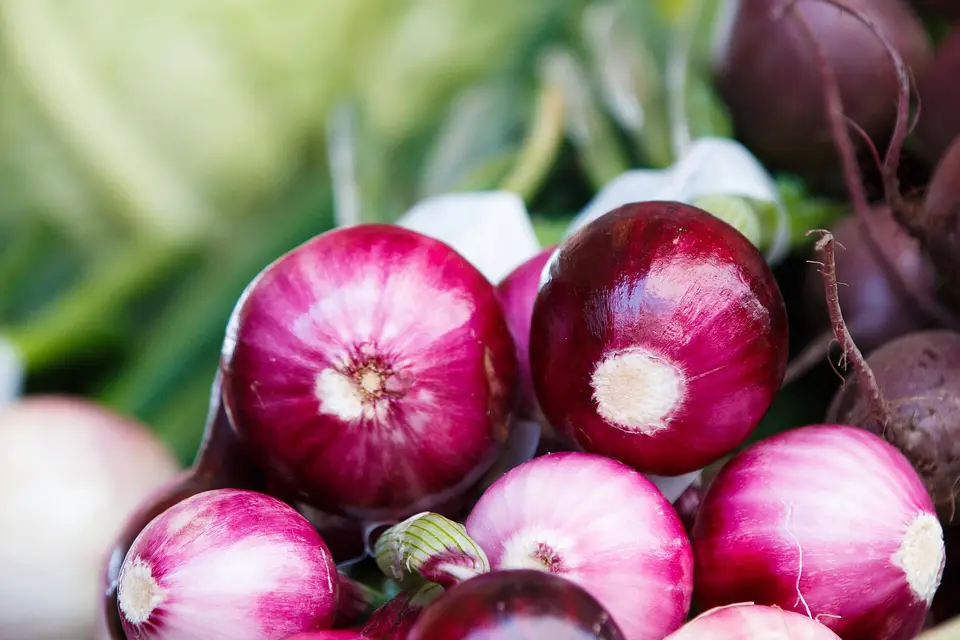
Onions look like the simplest thing in a seed catalog, and most gardeners order them without a second thought. Then the harvest comes in as a row of thick necks and bulbs the size of a walnut. Nine times out of ten the cause was decided at the order form: the wrong form of onion, the wrong size of set, or above all a variety bred for a different day length from the one in your garden. This guide covers the choices that matter before you click "add to cart", and what to do once the bundle arrives.
Three ways to buy onions
Catalogs offer onions in three forms, often for the same variety. Each one has a place.
| Form | What arrives | Strengths | Drawbacks |
|---|---|---|---|
| Sets | Small dry bulbs grown the previous season and stopped early | Easiest to handle and quick to grow; good for green onions and for storage onions | Few varieties; large sets tend to bolt |
| Plants (transplants) | Bundles of young bare-root seedlings, usually with tops trimmed | A head start without indoor sowing; wider choice of varieties than sets | Perishable on arrival; slower to establish than sets |
| Seed | A packet of black seed | Cheapest and widest choice, including storage and specialty types | Slow: needs early sowing indoors or outdoors, and thinning |
Utah State University Extension sums up the trade-off: sets are the easiest to handle and develop quickly, transplants are slower to develop but also produce good crops, and seeded onions must be planted early and thinned after they emerge. Raising your own transplants takes about eight weeks of growing before they go into the garden, so if you would rather sow than buy plants, our guide to starting seeds indoors covers the lights and containers you will need.
Whatever the form, one set, one plant or one seed gives you one onion. That makes ordering easier than for most crops: count the bulbs you want, add a margin for losses and thinning, and buy that many. Utah State suggests 10 to 20 feet of row per person as a starting point.
Day length: the choice that decides bulb size
An onion does not start to form a bulb when it reaches a certain age. It starts when the days grow long enough. Until then it makes leaves, and every leaf it makes before bulbing becomes a ring of the finished bulb. A variety that starts bulbing too early in the season stops at a small size; one that never gets the day length it needs may never bulb properly at all.
Breeders sort onions into three groups by the hours of daylight that trigger bulbing. The figures below come from University of Maryland Extension:
- Short-day onions begin bulbing at about 10 to 12 hours of daylight. They are grown mainly in the South, generally below 36° north latitude.
- Intermediate-day (sometimes sold as "day-neutral") onions need about 12 to 15 hours. They suit the middle latitudes, and the Maryland article names intermediate types as the most reliable choice there.
- Long-day onions need about 14 to 16 hours and do best north of 36° north, where midsummer days are long.
In practice this means: a northern gardener who buys a short-day variety will see bulbs form too early and stay small, and a southern gardener who buys a long-day variety may wait all summer for bulbs that never swell. Good catalogs label each variety with its day-length group, or show a map shaded by latitude. If a listing does not say, ask the seller before ordering, or choose a variety your state extension service recommends.
The day-length group also tells you something about the kitchen. Many short-day onions are the mild, sweet, juicy types, which do not keep well. Most long-day onions are the firm, pungent storage types you can still be eating in late winter. If you are in the transition zone and want both, an intermediate variety is the compromise.
Set size and bolting
Bolting means the onion sends up a flower stalk instead of putting its energy into the bulb. A bolted onion has a hard core where the stalk runs through it and does not store. Two things on the order form affect the risk.
Size. Utah State notes that larger sets or transplants, more than about 5/8 inch across, have a greater tendency to bolt. When sets are sold by grade, the smaller grades are usually the better buy for bulbs; the large ones are best planted thickly and pulled young as green onions.
Timing. Sets and transplants planted too early, into cold soil and cold weather, are also more likely to bolt. The Maryland article adds the opposite risk: very warm soil can push onions to bolt before bulbing starts. A ship date that lines up with your normal planting window avoids both.
Ordering and ship dates
Onion plants are live bare-root seedlings and travel the way any bare-root stock does: shipped in season, by region, and expected to go into the ground within days. Order in winter while choice is widest, and pick the ship date for your area rather than "as soon as possible". Sets are dormant and more forgiving, but they still need to be planted at the right time. Our page on hardiness zones and shipping seasons explains how nurseries schedule spring shipments.
Onions sit alongside potatoes on most spring vegetable order forms, and the two crops share some habits: both are planted early and both reward a bed that has not grown their relatives recently. If you are ordering both, our guide to seed potatoes by mail covers the other half of the order. Garlic, the onion's close cousin, works on the opposite calendar and is ordered in summer for fall planting; see seed garlic by mail.
When the bundle arrives
- Open the box the day it arrives and count the bundles or the weight of sets against the packing slip.
- Onion plants may look limp and a little dry after a few days in transit. That is normal for bare-root onions; the roots and the white base should still be firm.
- Keep plants in a cool, airy place, out of the sun, with roots uncovered and dry, and plant them as soon as the soil can be worked. Do not soak them for days or pot them up in water.
- Sets should be firm and dry. Discard any that are soft, moldy or already sprouting long shoots, and report a problem lot to the seller quickly.
Planting, spacing and feeding
Onions are a cool-season crop that grows best in full sun and in fertile, well-drained soil with plenty of organic matter. The figures from Utah State Extension are a useful baseline:
- sow seed ¼ to ½ inch deep; it emerges in two to three weeks;
- space seeds, sets or transplants 3 to 4 inches apart in the row, in rows 8 to 16 inches apart;
- thin seeded rows before the plants start to crowd each other or begin bulbing, and eat the thinnings as green onions.
Onions have shallow roots, so steady moisture matters more than for most vegetables. Utah State notes that drought stress while they grow reduces yield, bulb size and flavor, and that mulch helps keep the soil moist and the weeds down. Weeds are a real problem in the first two months, when onion leaves are too thin to shade them out. Side-dress with nitrogen in late spring and early summer, but stop by midsummer: extra nitrogen late in the season stimulates leaf growth and reduces how well dry onions keep.
Harvest, curing and storage
Bulb onions take roughly 100 to 120 days from seed to maturity, according to Utah State. The sign that they are ready is the tops falling over. Stop watering at that point, since wet soil near harvest delays curing and causes storage problems.
Lift the bulbs once most of the tops are down and leave them to dry for one to two weeks, with the leaves over the bulbs to shade them from the sun, or in an airy shed if the weather is wet. They are cured when the outer skins are papery and the roots are dry. Then cut the leaves about an inch or two above the bulb, or braid them, and store in mesh bags or slatted crates. Onions keep best cold and dry; Utah State gives 32°F to 40°F. Check them regularly and use any that soften or sprout first. Mild, sweet varieties keep for less time than pungent ones: Utah State gives two to four months for the sweet bulb onions it recommends, so eat those first.
Match the day length, buy small sets, plant on time, keep the soil moist, and cure before you store.
Sources
- Utah State University Extension, How to grow onions in your garden.
- University of Maryland Extension, Maryland Grows, Onions and day length.
 Growing what arrives
Seed potatoes by mail
Certified tubers, mealy or waxy types, cutting seed pieces, planting depth, hilling and storage.
 Growing what arrives
Seed garlic by mail
Hardneck or softneck, how much to order, fall planting, mulch, scapes and saving your own cloves.
 Seeds & saving
Starting seeds indoors
Count back from frost, give strong light, avoid damping off, harden off slowly.