Seed garlic by mail: hardneck or softneck, when to order and how to plant it in fall

Garlic is one of the few vegetables you buy by mail in summer, plant in fall and harvest the following summer. It is also one of the most rewarding: a pound of good planting stock becomes a year's supply, and the best bulbs from that harvest become next year's seed. Most of the decisions are made before the box arrives, starting with the type of garlic you order.
What "seed garlic" means
Garlic does not grow from true seed in the garden. It has largely lost the ability to set fertile seed, and some varieties never flower at all. You plant cloves, and each clove grows into a new bulb. "Seed garlic" in a catalog simply means whole bulbs grown and sold for planting rather than for the kitchen.
That distinction matters. University of Minnesota Extension advises buying cloves from national or local garlic seed producers and avoiding garlic from the grocery store. Much supermarket garlic is a softneck type grown in mild California conditions, and both Minnesota and Wisconsin extension services note that such varieties do poorly in cold climates and tend to develop a very hot flavor there. Planting stock from a grower who sells for planting also gives you a named variety, a description of how it performs, and a seller you can go back to if something is wrong.
Hardneck or softneck
Catalogs sort garlic into two broad groups, and the choice depends mostly on your winters and how long you want to store the crop.
| Hardneck | Softneck | |
|---|---|---|
| Flower stalk | Produces a stiff stalk, the scape | Usually none, so the necks can be braided |
| Cloves | Fewer, larger cloves in a single ring around the stalk | More cloves, in several layers, smaller toward the center |
| Climate | Best where winters are long and cold | Better suited to long seasons and mild winters |
| Storage | Generally shorter | Generally longer |
| Groups you will see | Rocambole, Porcelain, Purple Stripe | Artichoke, Silverskin |
These are tendencies rather than fixed rules. University of Minnesota Extension points out that a variety that grows as a softneck in one place can send up a flower stalk somewhere else. If you are new to garlic, a supplier in a climate similar to yours, or a catalog that says where each variety has done well, is the most useful guide. Our page on hardiness zones and shipping seasons explains how to describe your climate when you order.
One name to watch: elephant garlic is not a true garlic but a type of leek, Allium ampeloprasum. It forms very large, mild bulbs and is grown in much the same way, but it is a different plant.
When to order
Growers can only ship garlic once the summer crop has been dug and cured, so planting stock usually ships from late summer into fall. Many suppliers take orders well before that, and named varieties in small supply can sell out early. If you want something particular, order in spring or early summer and choose a ship date close to your planting time.
Seed garlic is usually sold by weight or by the bulb. The number of cloves per bulb varies by variety, so a pound of a large-cloved hardneck plants fewer feet of row than a pound of a many-cloved softneck. Read the catalog's clove count, or ask the grower, before you settle on quantities. If you plan beds from catalogs, our guide to planning a vegetable garden shows how to fit a fall crop into the rest of the year.
Garlic is a regulated plant product like any other. Ordering from a domestic grower is simple, but bulbs from another country fall under federal import rules, and some states restrict certain plant material; see buying plants and seeds across borders before you order from abroad.
When the box arrives
- Open it the day it arrives and check the bulbs against the packing slip and the variety labels.
- Good planting bulbs feel firm and heavy, with intact wrappers. Set aside any with soft, sunken, moldy or hollow cloves and contact the seller with photos, as you would for any live plant (our guide to unpacking a mail-order delivery covers claims).
- Keep the bulbs whole until planting. Store them in their mesh or paper bags in a cool, dry, airy place out of direct sun.
- Keep varieties separate and labeled; once the cloves are in the ground, they look identical.
When to plant
Garlic needs a period of cold to form good bulbs. In cold-winter regions, the aim is for cloves to grow roots in fall without pushing much green growth above ground before winter. University of Minnesota and University of Wisconsin extension both advise planting in fall, usually one or two weeks after the first killing frost. The roots and shoots start inside the soil before the ground freezes, and the shoots typically emerge the following spring.
Wisconsin's extension service notes that most varieties planted in spring without a proper cold treatment produce weak shoots and small bulbs; Artichoke types seem to need less winter cold and are the better choice if spring planting is your only option. In mild-winter areas, local extension advice on timing is worth more than any general rule.
How to plant
- Prepare the bed. Garlic does best in full sun and well-drained soil rich in organic matter. Have your soil tested; Minnesota's extension service gives a pH of 6.0 to 7.0 as ideal. Loosen the bed so the bulbs can expand, and avoid fresh manure.
- Break the bulbs a day or two before planting. Separate the cloves shortly before they go in, keeping the papery skins on. Plant the largest cloves; they generally give the largest bulbs.
- Point up, a few inches down. Set each clove pointed end up, with its base about 2 to 3 inches below the surface, and about 6 inches apart. Cloves planted too shallow are more easily damaged over winter.
- Mulch. Once planted, cover the bed with 3 to 4 inches of clean straw or shredded leaves. The mulch evens out soil temperatures through winter and keeps weeds down.
- Uncover in spring. Pull the mulch back once the threat of hard freezes has passed so the soil can warm, then return it around the shoots to hold moisture and suppress weeds.
Spring and early summer care
- Weeds: garlic competes poorly, and weeds cost bulb size. Mulch and shallow cultivation are the main tools.
- Feeding: garlic is a moderate to heavy feeder of nitrogen. Feed as shoots emerge in spring and again a few weeks later, guided by your soil test; Minnesota Extension warns that nitrogen applied too late can delay bulbing.
- Water: roots are shallow, and the crop is most sensitive to drought while bulbs are forming. Water deeply in dry spells, then stop as the foliage begins to wither, so the bulb wrappers stay clean.
- Scapes: hardneck types send up curling scapes in late spring. Many gardeners snap them off just after they start to curl and cook them. Wisconsin's extension service reports that removing them matters most for yield in poorly fertilized soil, and little in well-fed beds.
Harvest, curing and saving your own
Harvest too early and bulbs are small; too late and the wrappers split and cloves separate. Minnesota Extension suggests lifting when the lower leaves have turned brown while about half the upper leaves are still green, or digging a test bulb and cutting it in half: if the cloves fill their skins, the crop is ready.
Lift the plants with tops attached, knock off loose soil and cure them in a warm, dry, airy place out of the sun for three to four weeks. Then trim the roots and cut the stems just above the bulb, or braid softnecks.
Before you eat the harvest, set aside your best bulbs for planting. Choosing the largest, healthiest bulbs each year is how many gardeners build a strain suited to their own garden, and after a season or two you may only need to order garlic to try something new. Rotate the bed, too: Minnesota Extension advises moving garlic to a new spot on a four-year rotation to limit pests and diseases.
Order early, keep bulbs whole and cool, plant in fall once the cold sets in, and save the biggest bulbs.
Sources
- University of Minnesota Extension, Growing garlic in home gardens.
- University of Wisconsin-Madison Division of Extension, Wisconsin Horticulture, Garlic, Allium sativum.
 Growing what arrives
Planning a vegetable garden
Sun, soil, frost dates and a sowing calendar: turning catalog wishes into a plan.
 Ordering & arrival
Hardiness zones and shipping seasons
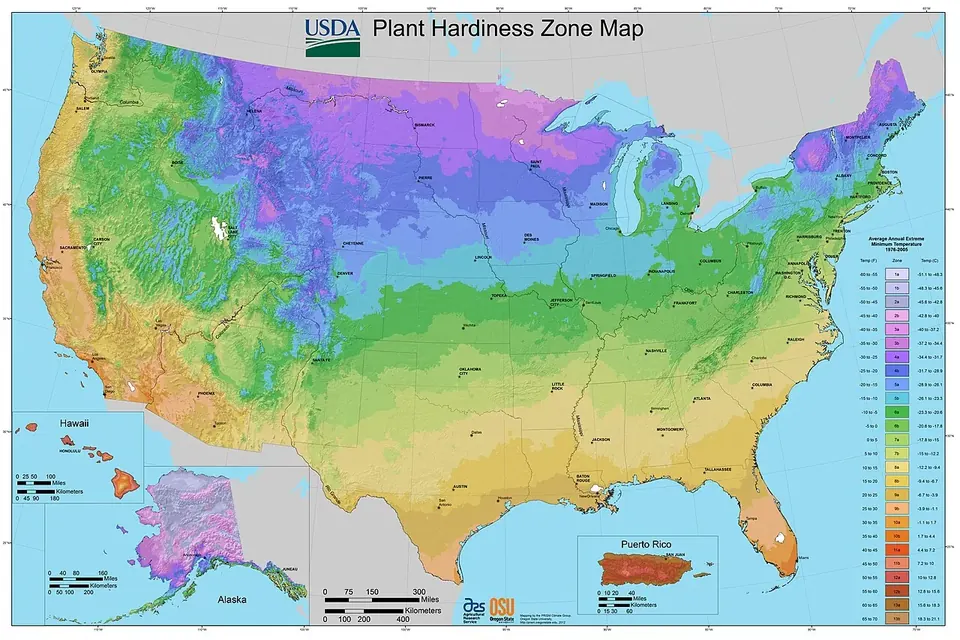
The 2023 USDA zone map, frost dates and heat: choosing the right ship date.
Ordering & arrivalWhen your plants arrive
Unpack the same day, check, photograph, water, shade, then plant or pot up.