Renting a house with a garden: what to check before you sign (soil, watering, upkeep written into the lease)
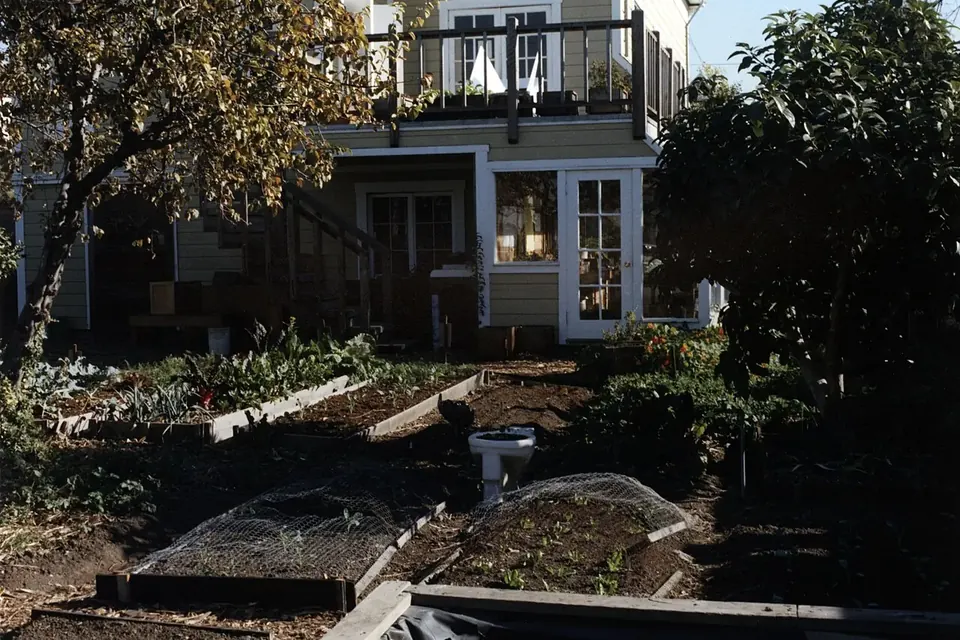
A rental with a garden is a gift for anyone who wants to grow food or flowers, but it comes with questions that ordinary house hunting does not cover. Who mows? Who pays for water in a dry summer? May you dig a vegetable bed, plant a tree, or remove a shrub? Is the soil safe for growing food? Checking a few things before you sign, and writing the answers into the lease, prevents most disputes.
Before you sign, compare neighbourhoods and houses for rent, so that the home and the garden both suit you for more than one season.
On the viewing: look at the garden properly
- Sun. Note which way the garden faces and where shade falls from trees, fences and neighbouring buildings. Vegetables need at least six hours of direct sun.
- Soil. Dig a small hole if you are allowed: is it sandy, clay, rubble or good loam? Does water stand in puddles?
- Existing plants. Fruit trees, hedges and established beds are a bonus, but also work. Ask what you are expected to maintain.
- Hardiness zone and microclimate. Look up the zone, and notice frost pockets, wind and walls that hold heat.
- Water. Is there an outdoor tap? An irrigation system? Does it work, and who maintains it?
- Storage. Is there a shed or space for tools, a compost bin, a place for containers?
Soil safety before you grow food
Older homes can have lead in the soil, particularly near walls, because of past use of lead paint and leaded gasoline. University of Illinois Extension notes that paints contained lead until 1978 and gasoline until 1996, that the highest concentrations are usually in the top inch or two of soil, and that raised beds or containers are recommended for food crops where soil tests above 400 parts per million of total lead, a threshold based on EPA guidance. Soil tests are inexpensive through state extension labs. Ask the landlord whether the soil has been tested; if not, test it yourself before planting vegetables, and use raised beds with clean soil if in doubt. Leafy greens and root crops carry the most risk.
Testing through the cooperative extension
Every state has a cooperative extension service run by its land-grant university, and most offer soil testing for home gardeners, either through their own laboratory or a partner lab. A routine fertility test reports soil pH and the lime requirement, the main nutrients, and fertilizer recommendations for what you want to grow. Screening for lead and other heavy metals may be part of the routine test or a separate analysis, so check before you send the sample; the University of Massachusetts soil testing laboratory, for example, lists metals analysis separately from its routine fertility test. The lab's instructions explain how to sample: usually several small cores from the same bed, mixed together, dried and sent in a labelled bag with the order form.
- Test the beds you will use, not the whole lot: a strip along an old painted wall can differ a great deal from the middle of the lawn.
- Ask the landlord first if digging is not yet agreed; taking a few cores leaves no visible mark, but it is still their land.
- Keep the report. It is useful for the next tenant and for the landlord, and a reason to agree raised beds if lead levels are high.
Water: the hidden cost
The US Environmental Protection Agency's WaterSense programme estimates that residential outdoor water use in the US amounts to nearly 8 billion gallons a day, mostly for landscape irrigation, and that the average household uses more water outdoors than for showering and washing clothes combined. Before signing, find out:
- Who pays the water bill, and whether it is metered separately.
- Whether there are local watering restrictions, and how they are enforced.
- Whether you are expected to keep a lawn green, and what happens in a drought.
- Whether you may install drip irrigation, rain barrels or a timer, and who owns them when you leave.
Watering without waste
WaterSense estimates that as much as 50 percent of residential outdoor water is lost to overwatering caused by inefficient irrigation methods and systems. Its watering tips are a good starting point for a tenant who pays the bill:
- Water to need. A landscape typically requires about one inch of water a week, including rainfall; a rain gauge or an empty tuna can on the lawn shows how much has fallen.
- Avoid the middle of the day, when the hot sun evaporates much of the water.
- Inspect any sprinkler system monthly for leaks and broken or clogged heads, and report faults to the landlord in writing.
- Ask about the controller. According to WaterSense, replacing a standard clock-based controller with a WaterSense labeled one could save an average home up to 15,000 gallons of water a year. If the system belongs to the landlord, an upgrade is their decision, but it is worth raising when you pay the bill.
- Drip lines and soaker hoses put water at the roots of vegetables and are easy to take with you.
Write upkeep into the lease
Disputes over gardens usually come from unclear expectations. Landlord-tenant law differs by state, so ask for these points in writing in the lease or an addendum:
| Question | Why it matters |
|---|---|
| Who mows, weeds, prunes and clears leaves? | Avoids charges at move-out or surprise bills |
| Who handles large trees and hedges? | Tree work can be costly and dangerous; usually the owner's job |
| May you dig new beds or build raised beds? | Avoids disputes over "damage" to lawns |
| May you plant perennials, shrubs or trees, and may you take them when you leave? | Plants in the ground may be considered part of the property |
| May you remove existing plants? | Landlords may value plants you see as weeds |
| Are compost bins, chickens or beehives allowed? | Often limited by leases and local rules |
| What condition must the garden be in at move-out? | The basis for any deduction from your deposit |
State guides set out the general rules on deposits, repairs and move-out inspections; California's Department of Real Estate, for example, publishes an annual guide for tenants and landlords. Check your own state's tenant guide or consumer protection office.
Who usually does what
There is no single national rule. The lease comes first, state landlord-tenant law fills the gaps, and local ordinances can add duties such as clearing sidewalks or controlling weeds. The pattern below is common in single-family rentals, but treat it as a starting point for the conversation, not as legal advice.
| What to check | Who is usually responsible | What to write in the lease |
|---|---|---|
| Mowing, weeding, leaf clearing | Often the tenant in a house; the landlord in multi-unit buildings | Who does it, how often, and whether a landscaping service is included in the rent |
| Large trees: pruning, removal, storm damage | Usually the landlord, as owner of the trees | That the landlord handles tree work, and how the tenant reports a dead, leaning or damaged tree |
| Hedges and shrubs | Varies; light trimming often falls to the tenant | Which plants the tenant trims, and to what height |
| Irrigation system and outdoor taps | Repairs usually the landlord; daily use the tenant | Who repairs leaks, who sets the controller, and who winterizes pipes in cold climates |
| Water bill | Depends on the lease and the meter | Who pays, and what happens under watering restrictions or in a drought |
| Soil testing | Usually the tenant, if they want to grow food | Permission to sample, and to install raised beds if results are poor |
| New beds, raised beds, plantings | The tenant, with permission | What may be added, what may be taken away at move-out, and what must be restored |
| Pests and invasive weeds | Varies by lease and local rules | Who deals with infestations such as poison ivy or invasive vines |
Trees and liability
Mature trees are the most valuable part of many gardens, and the one with the most serious risks. Liability for a tree that falls is usually decided under the ordinary law of negligence, which varies by state. North Carolina State Extension, in a 2022 publication on tree-fall liability, explains that North Carolina does not apply strict liability ("it's your tree, you pay"); instead, an owner has a duty to deal with the reasonably foreseeable danger a tree poses to neighbouring property, and factors such as whether a tree is dead or visibly dying, or leans prominently towards the neighbour's land, bear on foreseeability. The same publication notes that a homeowner's insurance policy should normally cover damage and removal when a neighbour's tree falls on a property, without the policy-holder having to prove fault.
For a tenant, this has three practical consequences:
- Report warning signs in writing: dead branches, cracks in the trunk, fungi at the base, a new lean, roots lifting the soil. Notice to the owner is what turns a hidden risk into a known one that they must deal with.
- Leave tree work to professionals the landlord hires. Climbing and cutting large limbs is dangerous, and cutting roots or branches without permission can make you responsible for the result.
- Check your renters insurance. A landlord's policy covers the building, not your belongings; renters policies typically cover personal property and personal liability, which matters if a guest is hurt in the garden you look after.
Fruit trees bring their own questions: who picks, who sprays, and who clears dropped fruit that attracts wasps and rodents. Write these down too.
Document the garden at move-in
- Photograph and date every part of the garden: lawn, beds, trees, fences, paths, irrigation.
- Note existing problems: bare patches, dead shrubs, broken edging, invasive weeds.
- Send the photos and notes to the landlord or agent and keep a copy.
- Repeat the same photos at move-out.
Garden in ways you can take with you
- Containers and raised beds on legs or with no permanent footings can move with you.
- Annual vegetables and flowers need no long-term commitment.
- Perennials in pots, divided from your own plants, travel well.
- Dwarf fruit trees in tubs are a portable orchard; see fruit trees by mail.
- Mail-order timing: if you might move within a year, favour fast crops and container plants over bare-root trees and asparagus beds that take years to pay off.
Our guide to small-space gardening covers containers and compact varieties in detail.
When you leave
- Return the garden to the agreed condition: lawns mown, beds weeded, containers and supports removed.
- Leave plants you agreed to leave, and take only what the lease allows.
- Pass on what you cannot take: seedlings, pots, tools, compost, to neighbours or local garden groups.
- Collect your seed packets and garden notes: they are the start of your next garden.
Check the sun, test the soil, and put the garden in writing.
Sources
- University of Illinois Extension, Lead in soil fact sheet (2019); Oregon State University Extension, publication EC 1616 on lead in garden soils.
- University of Massachusetts Amherst, Soil and Plant Nutrient Testing Laboratory, service description.
- US EPA WaterSense, Outdoor water use; Watering tips; WaterSense labeled irrigation controllers.
- North Carolina State Extension, Robert Andrew Branan, Tree fall liability: who is responsible for property damage? (April 2022).
- California Department of Real Estate, California Tenants: a guide to residential tenants' and landlords' rights and responsibilities.
- USDA Agricultural Research Service, USDA Plant Hardiness Zone Map (2023).
 Growing what arrives
Small-space gardening by mail
Compact varieties, container sizes, watering and vertical growing for small spaces.
 Growing what arrives
Planning a vegetable garden
Sun, soil, frost dates and a sowing calendar: turning catalog wishes into a plan.
 Growing what arrives
Fruit trees and berries by mail
Rootstocks, pollinizers and chill hours: ordering fruit that suits your garden.