How to choose and request free garden catalogs
Every winter, garden catalogs do something no website quite manages: they let you sit down with a whole season of possibilities and plan. Choosing the right catalogs, and knowing how to read them, is the first skill of gardening by mail. Most are still free to request, in print or as digital editions.
A long American tradition
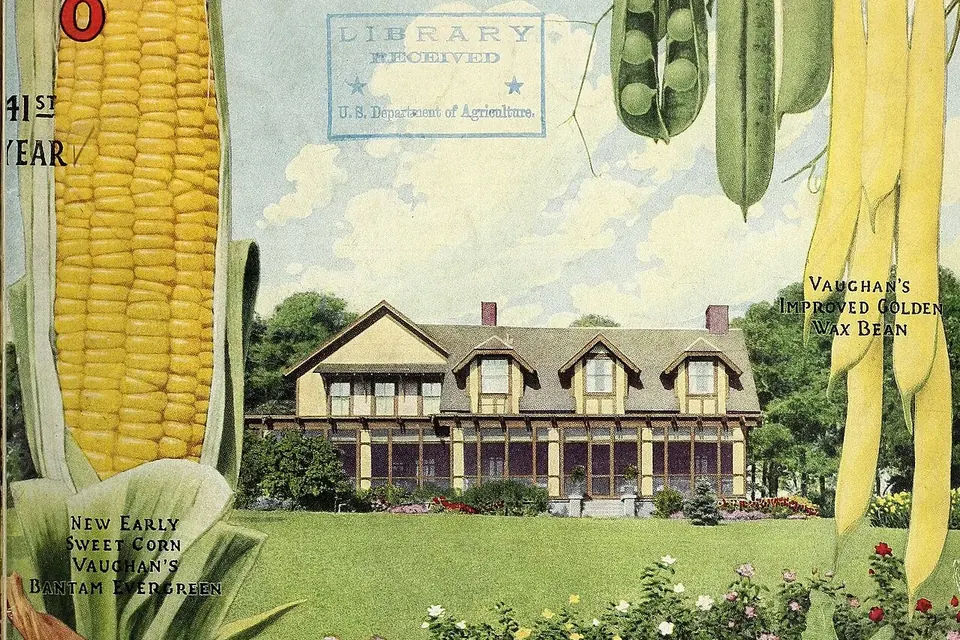
Seed and nursery catalogs have been mailed to American gardeners since the nineteenth century, when railways and the postal service let growers sell far beyond their own towns. Their history is preserved: the USDA National Agricultural Library holds the Henry G. Gilbert Nursery and Seed Trade Catalog Collection, which runs to some 4,500 boxes, and many of its catalogs have been digitized and can be browsed online. Old catalogs are a pleasure to read, and a useful reminder that many "heirloom" varieties were once ordinary catalog offerings.
The kinds of catalogs
| Type | What they sell | When they matter |
|---|---|---|
| Vegetable and flower seed | Seed packets, often with growing guides and trial notes | Winter, for spring sowing; some offer fall crops |
| Bulb specialists | Spring-flowering bulbs for fall planting; summer bulbs and tubers for spring planting | Summer for fall orders; winter for spring orders |
| Perennial and shrub nurseries | Bare-root and potted plants, plugs | Late winter to spring; some ship in fall |
| Fruit nurseries | Fruit trees on named rootstocks, berry plants, grapes | Order in winter for dormant spring shipping |
| Native-plant and regional nurseries | Plants and seed for particular regions | Varies by region; often fall and spring |
| Specialty growers | One group of plants: roses, daylilies, hostas, peonies, herbs, succulents | Usually a short shipping window for each plant |
| Garden supply | Tools, seed-starting equipment, irrigation, season extenders | Year-round |
How to request catalogs
- Start with your needs. List what you want to grow this year and the conditions you have: hardiness zone, sun, soil, space. That tells you which kinds of catalogs to look for.
- Use the supplier's own website. Most seed companies and nurseries have a "request a catalog" form. Many offer a digital edition you can read straight away.
- Ask locally. University extension offices, master gardener programs, garden clubs and botanical gardens often know which regional suppliers grow well in your area.
- Look for regional growers. Plants and seed grown in a climate similar to yours are more likely to be adapted to it. Search for nurseries in your state or region.
- Join seed-saving and plant societies. Specialist societies often publish member catalogs or seed exchanges with varieties that never reach commercial lists.
- Keep it manageable. Request a few good catalogs rather than every one you can find; you will read them more carefully.
What a trustworthy catalog tells you
- Botanical names, not just catchy common names, so you know exactly what plant you are buying.
- Hardiness zones, ideally with notes on heat tolerance and regional performance, based on the USDA Plant Hardiness Zone Map. See our guide to zones and shipping seasons.
- Mature size, spacing, sun and soil needs, and bloom or harvest time.
- The form you will receive: seed count or weight, bare-root, plug, pot size, bulb size. Our guide to plant sizes explains the terms.
- A shipping schedule by region or zone, and whether you can choose a ship date.
- A clear guarantee in writing: what is covered, for how long, and what you must do to claim.
- Honest descriptions that mention a plant's drawbacks, such as vigour, self-seeding, susceptibility to disease, and not just its virtues.
- Contact details with a real address and phone number.
Red flags
- Photos that look too perfect, or flowers in colours the species does not produce.
- Vague names like "rainbow rose" or "blue tulip" with no botanical name or variety.
- Plants described as hardy everywhere, or "grows anywhere".
- Aggressive spreaders sold as "fast ground cover" with no warning. Check your state's invasive and noxious plant lists before ordering.
- No physical address, no phone number, or prices far below other suppliers for the same plant.
- Seeds or plants shipped from another country without any mention of import permits. Buying plants or seeds for planting from abroad makes you an importer under USDA rules; see our guide to shipping across borders and state lines.
Print or digital?
Print catalogs are easier to browse, mark up and keep on the table through winter; digital editions are searchable, updated in real time with stock levels, and save paper. Many gardeners keep one or two favourite print catalogs and use digital versions for the rest. If you request print, recycle old editions when the new ones arrive, or pass them to a school or garden club for collage and planning.
Keeping your mailbox under control
Requesting catalogs can lead to many more arriving, because mailing lists are shared. A few ways to stay in control:
- Ask each company, when you order or request, not to share or rent your address.
- To stop catalogs you do not want, contact the company directly with the customer number printed on the address label.
- The Federal Trade Commission explains how to reduce promotional mail through DMAchoice, the service run by the Association of National Advertisers; registration lasts ten years and stops most, but not all, promotional mail.
Plan with the catalog in hand
- Mark everything you like on a first read, without worrying about space or budget.
- On a second read, check each choice against your zone, sun, soil and space.
- Draw a rough plan, and cut the list to what fits.
- Compare prices and sizes across two or three catalogs for the plants you are sure about.
- Order early for limited varieties, and choose ship dates that match your planting time.
Before you order, read our shopper tips for buying plants by mail.
A good catalog is a planning tool first, and a shop second.
Sources
- USDA National Agricultural Library, Henry G. Gilbert Nursery and Seed Trade Catalog Collection, and its digitized catalogs.
- USDA Agricultural Research Service, USDA Plant Hardiness Zone Map.
- USDA APHIS, How to buy plants and seeds online.
- Federal Trade Commission, How to stop junk mail.
 Catalogs & suppliers
Shopper tips for buying plants by mail
Sizes, guarantees, ship dates, payment, and what to do when an order goes wrong.
 Seeds & saving
How to read a seed catalog
Days to maturity, F1 or open-pollinated, disease codes and what the packet must tell you.
 Catalogs & suppliers
Choosing a mail-order nursery
Transparency, guarantees, inspection certificates, reviews and warning signs.