Heirloom pumpkin seeds: varieties to order and how to save your own seed
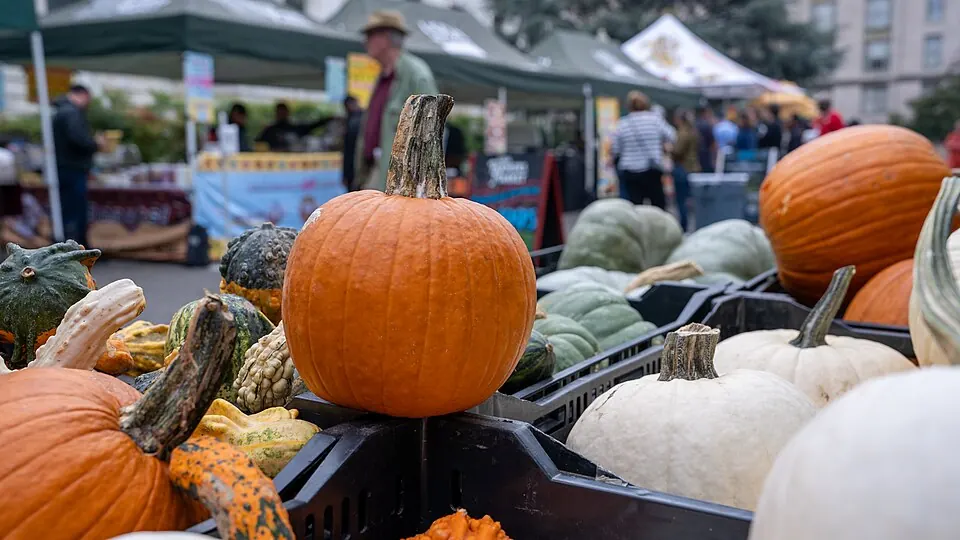
The seed catalogs that arrive in winter list dozens of pumpkins, and the heirloom pages are the most tempting: flattened French pumpkins the colour of brick, blue-grey Australian ones, tan "cheese" pumpkins from Long Island. Heirloom varieties are open-pollinated, which means that, with a little care, you can save their seed and grow the same pumpkin next year. This guide explains how to choose them and how to keep them going.
What "heirloom" means on a pumpkin listing
There is no legal definition of an heirloom vegetable in the United States. Seed companies use the word for open-pollinated varieties that have been grown and passed on for several generations, often for fifty years or more, sometimes within a family or a region. What matters for you as a gardener is the open pollination: an open-pollinated pumpkin pollinated by another plant of the same variety produces seed that grows into the same kind of pumpkin. A hybrid, marked F1 in catalogs, is a first-generation cross between two parent lines; its seed will not reproduce the parent. Our guide to reading a seed catalog explains the other abbreviations you will see.
Start with the species
Everything that matters for seed saving, and much that matters in the kitchen, follows from the species. The Royal Horticultural Society notes that most pumpkins are varieties of Cucurbita pepo or Cucurbita maxima; a third group, Cucurbita moschata, includes the butternut squash and several of the best pie pumpkins. Good catalogs print the species in each listing. If yours does not, the stem is a useful clue: pepo stems are hard, five-sided and prickly; maxima stems are round, soft and corky; moschata stems are five-sided but flare out where they meet the fruit.
| Species | Typical traits | Heirloom examples often listed |
|---|---|---|
| C. pepo | The classic orange jack-o'-lantern and small sugar pumpkins; stores for a few months | 'Connecticut Field', 'Small Sugar' (also sold as 'New England Pie'), 'Winter Luxury Pie' |
| C. maxima | Large, often flattened or warty fruit with dense, sweet flesh; good keepers | 'Rouge Vif d'Étampes' (the "Cinderella" pumpkin), 'Jarrahdale', 'Galeux d'Eysines' |
| C. moschata | Tan or buff skin, fine-textured flesh, tolerant of heat and of squash vine borer; the longest keepers | 'Long Island Cheese', 'Musquée de Provence', 'Seminole' |
Choosing varieties by use
For pies and baking, gardeners and cooks tend to prefer the smaller sugar pumpkins and the moschata types, whose flesh is less stringy and less watery than that of carving pumpkins. 'Long Island Cheese' is a long-standing favourite in the northeastern United States, and 'Winter Luxury Pie', with its fine netted skin, has a following among bakers.
For carving, 'Connecticut Field' is the traditional choice: thin-walled, light for its size and a clear orange. It is not a good eating pumpkin, and it does not keep for long.
For storage and the winter kitchen, look at the maxima and moschata varieties. Grey-blue 'Jarrahdale' and the deeply ribbed 'Musquée de Provence' can sit in a cool room for months and look handsome while they wait.
For short seasons, check the days to maturity in each listing and compare them with the frost-free period where you live. Large maxima and moschata varieties usually need a long, warm season; in northern gardens, choose the shorter-season varieties or start seed indoors a few weeks before the last frost, as described in our guide to starting seeds indoors.
Why pumpkins cross, and why it matters
Pumpkin flowers are either male or female, and bees carry pollen from one to the other, often between plants and between gardens. As the University of Minnesota Extension explains, insects can cross-pollinate cucumbers, melons, squash, pumpkins and gourds; the cross does not change the fruit you harvest this year, but seed from it will grow into vines with fruit unlike the parent, often with poorer flavour.
Crossing happens only within a species. A 'Long Island Cheese' (moschata) will not cross with a 'Connecticut Field' (pepo), but a 'Connecticut Field' will cross readily with a zucchini, an acorn squash or an ornamental gourd, which are all pepo too. If you grow one variety of each species and your neighbours grow none, you can save seed from all three. Otherwise, you need to control pollination yourself.
Saving true-to-type seed, step by step
- Hand-pollinate. In the evening, find male and female flowers of the same variety that will open the next morning (the female has a tiny pumpkin behind the petals). Close them with a piece of masking tape or a clothes peg. Early the next morning, pick the male flower, remove its petals, open the female flower and brush the pollen onto the stigma. Tape the female flower shut again and mark the stem with a tag or a piece of yarn.
- Pollinate several fruits from several plants. Seed from a single fruit narrows the variety over time; seed savers try to keep seed from a number of plants.
- Let the fruit ripen fully. Leave the marked pumpkin on the vine until the plant dies back or frost threatens. Seed from an immature fruit germinates poorly.
- Cure the fruit. Store the harvested pumpkin in a warm, dry place for a few weeks before you open it. The seeds continue to mature inside.
- Clean and dry. Scoop out the seed, rinse off the pulp, discard flat or empty seeds, and spread the rest on a screen or a plate in a single layer. Stir them every day until they snap rather than bend.
- Label and store. Write the variety, the year and the number of plants on the envelope, and keep it cool, dark and dry.
Stored this way, pumpkin seed keeps well for several years; our guide to how long seeds last explains how to test germination before you sow an old packet. For the principles that apply to every crop, from isolation to labelling, see seed saving basics.
Ordering heirloom pumpkin seed by mail
Pumpkin seed is large and travels well, so it is one of the easiest things to buy by mail. Order in winter, when the catalogs are fresh and the rarer varieties are still in stock. Look for listings that give the species, the days to maturity, the typical fruit weight and some history of the variety; small seed companies and seed-saving organisations often add where the variety came from and who kept it going. A packet of a few dozen seeds is more than most gardens need, which leaves plenty to share or to keep in reserve while you learn to save your own.
Sources
- Royal Horticultural Society, How to grow pumpkins.
- University of Minnesota Extension, Saving vegetable seeds.
 Seeds
Seed saving basics
Start with beans, peas, lettuce and tomatoes; isolate, harvest, dry and label.
 Seeds
How to read a seed catalog
Days to maturity, F1 or open-pollinated, disease codes and what the packet must tell you.
 Seeds
How long seeds last
Viability by crop, cool and dry storage, and a ten-minute germination test.